
WHAT YOU NEED TO KNOW
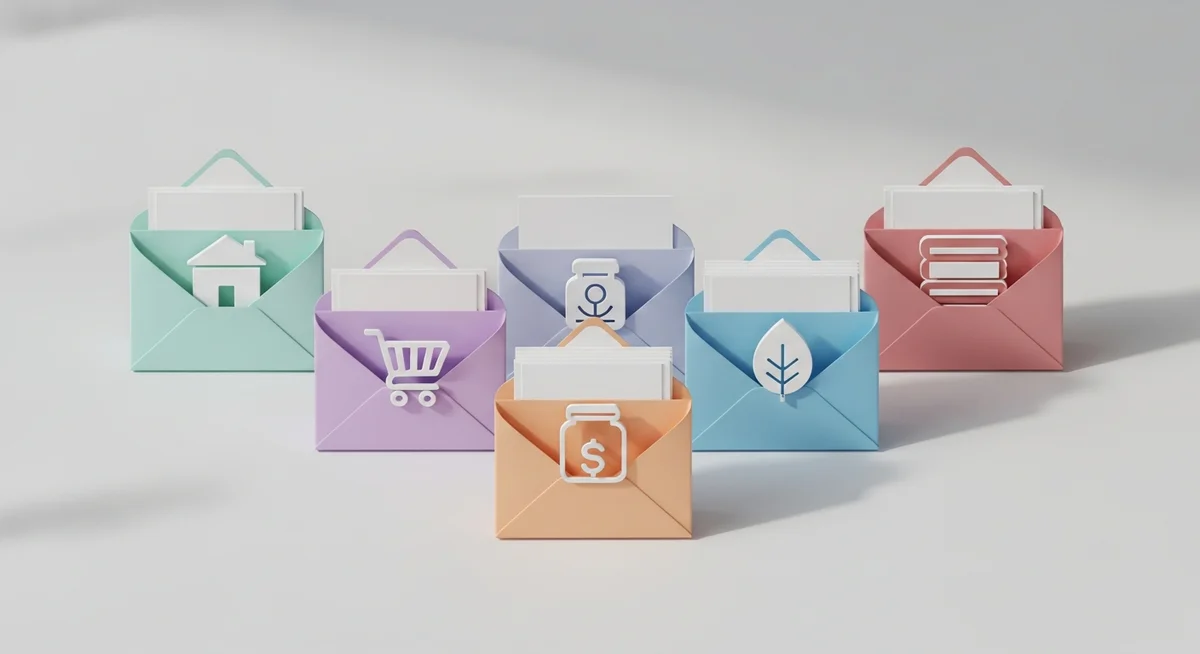
Cash stuffing is a highly tactile budgeting method where you withdraw your monthly discretionary income in cash and distribute it into labeled envelopes to prevent overspending.
- The system requires you to withdraw 100% of your monthly variable spending in physical paper bills.
- By relying entirely on physical cash, it eliminates the risk of credit card overdraft fees and impulse swiping.
- Unlike funds in bank accounts, cash stored at home lacks protection from the Federal Deposit Insurance Corporation (FDIC) in the event of theft or fire.
Your success with this system relies heavily on your discipline to stop spending once an envelope is empty and avoid borrowing from other categories.
What Is Cash Stuffing: The Envelope Budget Method Explained?
Cash stuffing is a hands-on budgeting technique where you divide physical currency into individual, labeled envelopes representing your monthly spending categories. Once an envelope runs out of cash, you cannot spend any more money on that category until the next month begins. This system targets variable, discretionary expenses like groceries, dining out, and entertainment. By taking away the convenience of digital transactions, it forces a physical awareness of every dollar that leaves your hands.
How to Start Cash Stuffing in 5 Steps
Starting this tactile budgeting system requires a clear plan before you ever visit an automated teller machine (ATM).
1. Create a baseline budget
You must first list your total monthly income and subtract your fixed bills, such as rent, insurance, and utilities. The Federal Reserve reported in recent household surveys that tracking fixed costs is the foundation of avoiding cash shortfalls. What remains after paying these essential bills is your discretionary income, which is the money you will allocate to your envelopes. For example, if you earn $3,500 a month and your fixed expenses total $2,100, you have $1,400 left for cash stuffing.
2. Choose your cash envelope categories
Next, identify which of your spending categories are prone to overspending and can be paid in physical bills. Typical categories include groceries, gas, clothing, personal care, and weekly entertainment. You do not need an envelope for online bills like your internet or car payment, as those are handled directly from your bank account. Keep your categories simple at first (perhaps four to six envelopes) to avoid making the system too complicated to manage.
3. Withdraw your cash and “stuff” your envelopes
At the start of your pay cycle, withdraw your total discretionary budget from your bank account in physical currency. If your monthly budget for groceries is $400, your gas budget is $150, and your fun money is $100, you will withdraw exactly $650 from your account. Divide this money into your physical envelopes according to those exact amounts. Be sure to ask the bank teller for a mix of smaller denominations, such as $5, $10, and $20 bills, to make daily transactions easier.
4. Spend only what is inside each envelope
When you go to the grocery store, you take only the envelope labeled groceries and pay with the cash inside. If your grocery bill comes to $85, you pay using that cash and return the remaining change and receipt directly to the grocery envelope. You must leave your credit and debit cards at home when running these errands to eliminate the temptation of swiping for extra items. This physical restriction is what makes the system highly effective for chronic overspenders.
5. Track your spending and adjust
Keep a log of your purchases either on a small slip of paper kept inside each envelope or in a ledger. At the end of the month, review how much cash is left in each category and adjust your amounts for the following month. If your gas envelope consistently has money left over while your grocery envelope runs empty by week three, transfer some funds in your next monthly plan. Budgeting is an iterative process, and your limits should reflect your actual cost of living in 2026.
Pros and Cons of the Envelope Budget Method
Before switching entirely to physical currency, it is helpful to weigh the psychological benefits against the practical risks.
| Category | Advantage | Disadvantage |
|---|---|---|
| Financial Control | Limits spending to exact cash on hand, preventing debt. | No opportunity to build credit history through routine use. |
| Security | Protects against digital fraud and unauthorized card charges. | Zero protection from theft or physical loss since FDIC insurance does not apply. |
| Convenience | Requires no smartphone apps or online banking passwords. | Inconvenient for online shopping, bills, or subscription services. |
| Growth | Encourages disciplined savings habits for visual spenders. | Misses out on compound interest from high-yield savings accounts. |
Benefits of cash stuffing
Using physical paper money offers several psychological and financial advantages:
- Tangible spending feedback: You physically see and feel your money supply shrinking, which naturally deters impulsive purchases.
- Zero risk of debt: Because you cannot spend money you do not have in your hand, you cannot accumulate credit card balances or trigger overdraft fees.
- Simple boundary setting: It eliminates the need for complex tracking spreadsheets or expensive subscription apps because your balance is always visible.
Drawbacks and risks of cash stuffing
Despite its benefits, relying heavily on physical currency has notable downsides in 2026:
- Lack of security: Unlike money held in a bank account protected by the FDIC, lost or stolen physical cash is permanently gone.
- No interest earnings: Cash sitting in an envelope does not earn interest, missing out on high-yield savings rates that can help grow your emergency fund.
- No rewards points: You forfeit cash back, travel miles, or credit-building opportunities that responsible credit card use provides.
- Inconvenience for online shopping: You cannot easily use cash for digital purchases, rideshare apps, or online grocery orders.
What to Do When an Envelope Runs Out (or Has Leftover Cash)
When an envelope runs empty, you must stop spending in that category immediately. If your entertainment envelope is empty, you must decline social invitations or find free local activities. Do not borrow cash from your grocery or gas envelopes, as this defeats the purpose of the system and creates shortages in essential categories. The Consumer Financial Protection Bureau (CFPB) emphasizes that maintaining clear boundaries in your budget is key to building long-term financial resilience.
If you have leftover cash at the end of the month, you have two excellent choices. First, you can use the leftover money to pay down high-interest debt or deposit it directly into a high-yield savings account. Alternatively, you can roll the money over into the next month, allowing you to build up a surplus for larger, future purchases in that specific category.
Can You Do Envelope Budgeting Without Cash?
You can easily adapt this classic budgeting strategy to the digital age if carrying physical cash feels too risky or inconvenient.
Best digital envelope budgeting tools and apps
Several digital tools allow you to replicate the envelope system electronically while keeping your money safe in a bank account:
- Sub-savings accounts: Many modern banks allow you to create multiple, labeled savings accounts within your main portal for different savings goals. This is the cheapest, safest, and most secure alternative to physical envelopes.
- Budgeting applications: Dedicated apps like YNAB (You Need A Budget) or Qube Money let you create virtual envelopes and link them to your transactions.
- Prepaid debit cards: You can load specific dollar amounts onto separate prepaid cards, though you should check the terms to avoid high monthly maintenance fees.
Who Is the Cash Envelope Method Best For?
The cash envelope system is a highly targeted strategy that works exceptionally well for specific financial habits:
- Chronic overspenders: People who struggle with impulse shopping and find it too easy to swipe plastic cards.
- Credit builders and budget starters: Individuals who want to establish basic budgeting habits without the risk of falling into debt.
- Paycheck-to-paycheck households: Anyone who needs to ensure their limited funds are strictly allocated to essential needs first.
- Visual and tactile learners: People who manage their lives better when they can physically see and touch their resources.
Cash Envelope System FAQs
Is it safe to keep that much cash at home?
Keeping hundreds of dollars of physical currency at home carries substantial risk of theft, fire, or accidental loss. If you choose this method, purchase a fireproof, waterproof home safe that can be securely bolted to the floor. Never discuss your cash habits with others, and consider keeping your primary emergency fund safely in an FDIC-insured bank. For details on consumer safety and financial security, you can review the Payday Advisors home resource.
How do you handle fixed online bills with this method?
You should never withdraw cash to pay for fixed bills like rent, car payments, insurance, or utilities. Leave the exact amount of money needed for these automatic deductions in your checking account, and only withdraw the cash needed for your variable, everyday expenses. This hybrid approach ensures your bills are paid on time without the hassle of buying money orders or traveling to payment offices. If you need details on your rights regarding automatic electronic fund transfers, consult the Electronic Fund Transfer Act guidelines published by the Federal Trade Commission (FTC).
Why is cash stuffing trending?
The revival of cash stuffing is largely driven by viral social media videos showing creators sorting colorful bills into aesthetic binder organizers. While the trend looks modern, it is actually a timeless, decades-old strategy packaged for a visual audience. The visual satisfaction of sorting cash offers a sense of control over your finances, especially during periods of high living costs and economic uncertainty in 2026. If you need further clarification on our editorial policies or data collection practices, you can view our Privacy Policy online.