
WHAT YOU NEED TO KNOW
Opening a modern deposit account is a straightforward process that you can complete online in under 10 minutes if you have your identification and taxpayer details ready.
- You must provide at least one form of government-issued photo identification and your Social Security number or individual taxpayer identification number.
- Most online banks require a minimum opening deposit of $0 to $25, while traditional brick-and-mortar branches may require $25 to $100.
- Federal deposit insurance secures your personal deposits up to $250,000 per depositor, per insured bank, for each account ownership category.
- Many institutions offer ways to waive monthly maintenance fees, which typically range from $5 to $15 on standard checking accounts.
Your choice between online and physical institutions will dictate your average monthly fees and access to in-person cash deposits.
Choosing the Right Type of Bank Account
Checking Accounts
A checking account serves as the hub for your daily spending, bill payments, and payroll deposits. It provides direct access to your funds through a debit card, online transfers, and physical checks. Most modern checking accounts in 2026 offer mobile check deposits and peer-to-peer payment integrations. These accounts focus on transaction liquidity rather than building interest.
Savings Accounts
A savings account is designed to hold your emergency funds or short-term reserves while earning interest. Unlike checking options, these accounts generally limit your monthly outbound transfers to help you preserve capital. High-yield savings accounts at online institutions often pay significantly higher interest rates than traditional neighborhood branches. They are excellent tools for building stable habits without putting your money at market risk.
Joint Accounts
A joint account allows two or more people to share ownership of the deposited funds. Each co-owner can deposit money, write checks, and make purchases independently. This structure is common for married couples, business partners, or parents helping their children manage money.
Here are the key aspects of managing joint accounts:
- Equal ownership rights mean that any account holder can withdraw all the funds without the other person’s permission.
- Shared financial liability makes both parties responsible for any overdrafts, fees, or unpaid balances.
- Simplified survivorship rules usually transfer full ownership of the funds to the surviving partner if one owner passes away.
Student and Teen Accounts
Many financial institutions offer specialized checking and savings options for younger customers. These products usually waive monthly service fees and have lower minimum balance requirements to encourage early financial literacy. For minors under the age of 18, a parent or legal guardian must co-sign the account application. Once the account holder reaches adulthood, usually at age 18 or 19 depending on state law, the bank typically transitions the product into a standard checking account.
What Do You Need to Open a Bank Account?
To successfully complete your application, you must meet specific bank account requirements. Collecting your paperwork beforehand will prevent delays, whether you apply online or at a physical branch. If you are wondering what do you need to open a bank account, the list is relatively standard across most financial institutions.
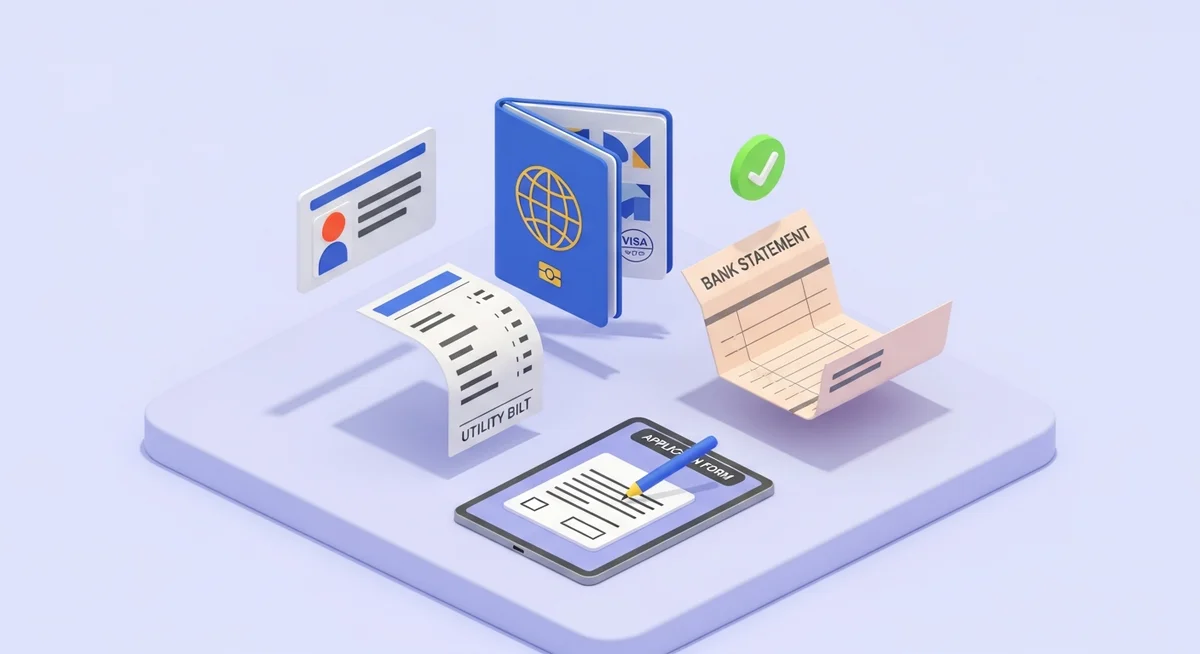
Here are the primary items you must collect before applying:
- Government-issued photo identification to prove your identity.
- Taxpayer identification number for tax reporting purposes.
- Proof of physical address to confirm where you reside.
- Initial opening deposit in the form of cash, check, or external transfer.
Acceptable Forms of Personal Identification
Financial institutions must verify your identity to comply with federal regulations. You generally need to provide one or two forms of valid government-issued photo identification. A state-issued driver’s license, a domestic passport, or a military identification card are the most widely accepted documents. Some banks also accept consular identification cards or foreign passports if you do not hold United States citizenship.
Proof of Address and Taxpayer Information
Banks must verify your physical residential address, as a post office box is usually not sufficient for opening a new account. You can verify your address using a recent utility bill, a lease agreement, or a formal mortgage statement. Additionally, you must provide a Social Security number or an Individual Taxpayer Identification Number. According to the Internal Revenue Service, this tax information is required to track any interest income your account earns over the year.
Requirements for Minors and Joint Accounts
Opening an account for a minor under 18 years of age requires a joint structure with a parent or legal guardian. The adult co-signer must provide their personal identification, Social Security number, and proof of address alongside the minor’s information. For standard joint accounts, both adult applicants must submit all identification documents and sign the signature card. Both parties are equally responsible for the ongoing maintenance of the account.
Opening a U.S. Bank Account as a Non-Resident
Non-residents can open bank accounts in the United States, but the process usually requires an in-person visit to a branch. You must bring a valid foreign passport along with a secondary form of identification, such as a consular ID or a utility bill from your home country. You will also need an Individual Taxpayer Identification Number or a foreign tax ID. Because online automated identity verification systems are tailored to domestic credit histories, physical branch verification is almost always necessary for non-residents.
Understanding Bank Account Fees and Features
Before selecting a financial institution, you must analyze the ongoing costs associated with managing your money. Traditional banks often charge routine service fees, but these costs are largely avoidable if you understand the rules. Comparing the terms of different accounts helps you avoid losing your hard-earned money to administrative penalties.
| Fee Type | Average Cost (2026) | Standard Waiver Method | Cheaper Alternative |
|---|---|---|---|
| Monthly Maintenance | $5 to $15 | Keep a minimum balance or set up direct deposits | Choose an online-only bank with $0 monthly fees |
| Out-of-Network ATM | $2.50 to $5 | Use your own bank’s physical ATM network | Use a credit union with a nationwide shared branch network |
| Overdraft Fee | $15 to $35 | Opt out of overdraft protection services | Pick an account that denies transactions instead of charging a fee |
Monthly Maintenance Fees
Many traditional financial institutions charge a monthly service fee to cover the administrative costs of maintaining your account. These fees typically range from $5 to $15 per month. Fortunately, most banks provide clear paths to waive this charge entirely. Common fee-waiver methods include receiving a minimum amount of direct deposits each month or keeping a specified daily balance in the account.
Minimum Deposit and Balance Requirements
Some accounts require a minimum deposit to open, which can range from $25 to $100 at brick-and-mortar institutions. Online-only banks frequently have $0 minimum deposit requirements. Additionally, you may need to maintain a certain daily balance to avoid monthly maintenance fees. For example, if you keep a daily balance of $1,500, a traditional bank might waive their $12 monthly fee, saving you $144 over a year.
Overdraft Protection and ATM Fees
Overdraft fees occur when you spend more money than you have in your account and the bank covers the transaction. These fees can reach up to $35 per transaction, but many modern accounts now offer fee-free overdraft limits or grace periods. ATM fees are another common expense if you use a machine outside your bank’s network, costing you $2.50 to $5 per transaction. You can avoid these ATM costs by choosing an institution with a large local network or one that offers ATM fee rebates.
How to Open Bank Account Options: Step-by-Step
Once you have selected a financial institution and collected your documents, you are ready to apply. The exact steps vary slightly depending on whether you choose to use an online platform or walk into a physical office. However, the general sequence follows a standardized path designed to get your account running efficiently.
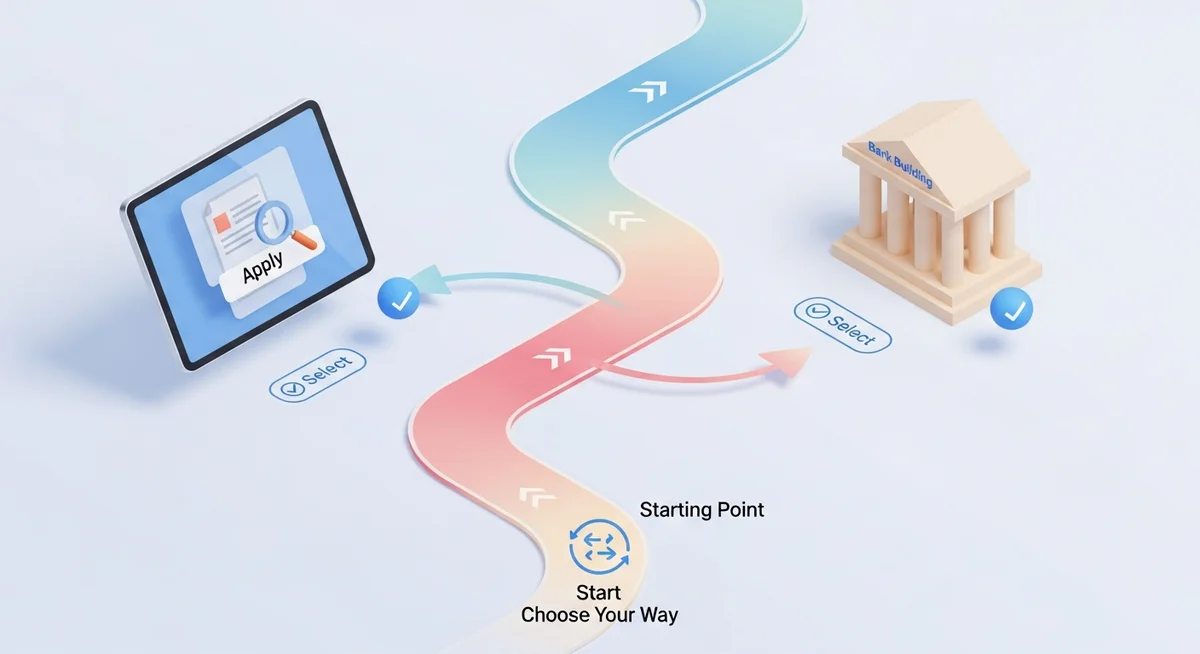
Step 1: Choose Between Online vs. In-Person Banking
You must decide if you want to complete your application online or visit a local branch. Online banking is convenient, fast, and often comes with lower ongoing fees. Physical branches are better if you regularly deposit cash, need in-person customer service, or must open an account for a non-resident. If you prefer face-to-face interaction, look up a local office and check their operating hours before you go.
Step 2: Complete the Application
Whether you are online or at a desk with a banker, you must fill out a formal application. You will enter your full legal name, date of birth, home address, and tax identification number. You will also need to present your physical photo identification or upload clear photos of it. The bank will review your application and check consumer reporting databases like ChexSystems to verify your previous banking history.
Step 3: Fund Your New Account
Once your application is approved, you must make an initial deposit to activate the account. If you are opening the account online, you can link an existing bank account and make an electronic transfer. If you are at a physical branch, you can deposit cash, write a physical check, or use a debit card. Make sure you deposit at least the minimum amount required to keep the account open and active.
Step 4: Set Up Online Banking and Security Features
After funding your account, register for the bank’s online portal or download their mobile application. Create a strong, unique password and enable multi-factor authentication to protect your funds from unauthorized access. You should also set up direct deposit with your employer by providing them with your new routing and account numbers. Finally, choose paperless billing and set up account alerts to monitor your balance in real time.
Frequently Asked Questions
Understanding the details of opening an account helps you avoid surprises at the bank. Here are answers to some of the most common questions regarding the application process:
- How much money do I need to open a bank account?
- Can I open a bank account if I’ve had banking issues in the past?
- What is FDIC insurance and why does it matter?
- Can I open a bank account online without going to a branch?
How much money do I need to open a bank account?
The amount of money you need varies widely by the specific institution you choose. Many online banks allow you to open an account with a $0 balance and have no ongoing minimums. Traditional brick-and-mortar banks generally require an initial deposit between $25 and $100. Always check the specific account details before applying to ensure you can meet the initial deposit threshold.
Can I open a bank account if I’ve had banking issues in the past?
If you have had unpaid overdrafts or closed accounts in the past, standard banks may deny your application. This is because most banks use specialty consumer reporting agencies to evaluate your financial history. According to the Consumer Financial Protection Bureau, consumers can request a free copy of their specialty reports annually to check for errors. If you are denied a standard account, look for a second-chance checking account designed to help builders restore their banking history.
What is FDIC insurance and why does it matter?
The Federal Deposit Insurance Corporation is an independent federal agency that protects bank depositors. If an insured bank fails, the FDIC ensures you do not lose your deposited funds. Your personal accounts are automatically insured up to $250,000 per depositor, per institution, for each account category. Always verify that your chosen financial institution is an active member of the FDIC before depositing money.
Can I open a bank account online without going to a branch?
Yes, most major financial institutions allow you to open a bank account entirely online. You can complete the process on a smartphone or computer in just a few minutes. You must be at least 18 years old and have a valid Social Security number to use the online application system. If you do not have a standard credit history or domestic ID, you will likely need to visit a branch to verify your identity.