
WHAT YOU NEED TO KNOW
A written budget is your most powerful tool to stop living paycheck to paycheck and gain control over where your hard-earned money goes every month.
- The basic budget definition is a written plan that tracks your income and expenses over a specific timeframe, usually 30 days.
- Knowing what is a budget and using one helps you identify hidden leaks where you might be overspending by 10% to 20% or more.
- Creating a structured spending plan allows you to save at least $100 to $300 monthly by intentionally allocating funds for emergencies.
Your success depends entirely on choosing a method that fits your natural spending habits rather than forcing yourself into a highly restrictive plan.
What Is a Budget?
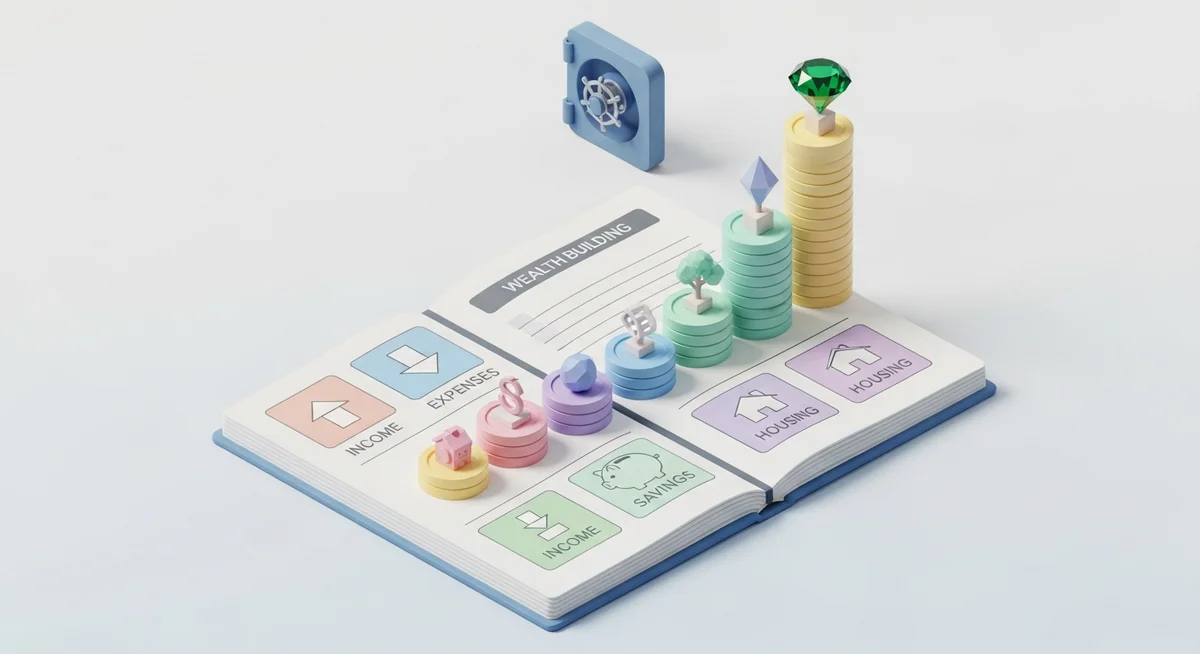
A budget is a written plan you design to decide how you will spend your money each month. It acts as a financial roadmap, comparing your total income against your bills, savings goals, and daily expenses. By definition, a budget is not meant to restrict your lifestyle, but rather to give you total clarity on where your money goes.
The core purpose of a budget is to ensure your monthly spending does not exceed your take-home pay. According to consumer guidelines from the Federal Trade Commission (FTC), keeping a written record is the most effective way to identify opportunities for saving. Without a clear plan, you run a high risk of running out of cash before your next paycheck arrives.
Why Is Budgeting Important?
Understanding the benefits of budgeting is essential for taking charge of your financial future. When you do not track your money, minor expenses can quickly accumulate and derail your monthly goals. A budget brings structure to your finances, showing you exactly how much room you have for discretionary spending.
For example, if you earn $3,500 per month and spend $400 on dining out without realizing it, a budget exposes this leak. You can then redirect $200 of that amount toward building an emergency fund or paying down credit card debt. This simple adjustment changes your relationship with money from reactive to proactive.
The primary benefits of budgeting include:
- Controlled Spending: It keeps your daily purchases aligned with your actual income.
- Goal Achievement: It helps you calculate exactly how much to save monthly for long-term plans like buying a home.
- Debt Reduction: It frees up cash to pay off high-interest loans, student debt, or medical bills.
- Reduced Stress: It provides a clear safety net, making you feel more secure when unexpected bills arrive.
How Do You Make a Budget?
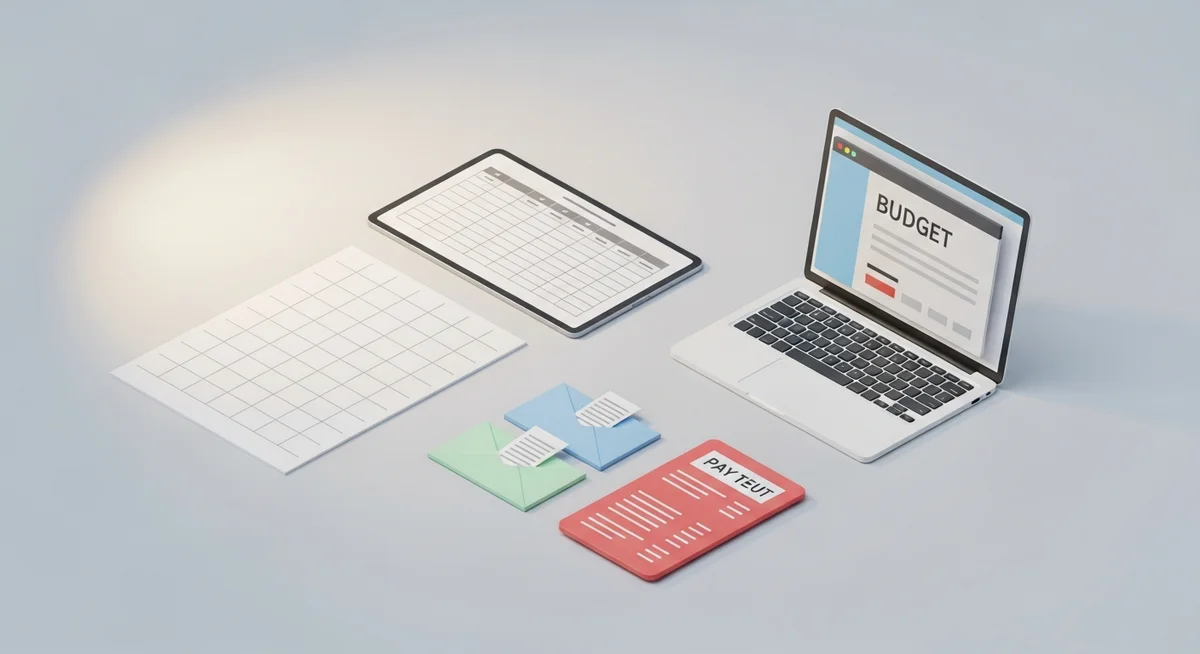
Creating a budget does not require complex math or expensive software. You can start with a simple piece of paper, a spreadsheet, or a free online worksheet. The Federal Trade Commission (FTC) recommends gathering your recent bills and pay stubs before you begin.
Follow these five steps to build a practical budget:
- Calculate your net income to know your true baseline.
- Track and categorize every expense over the last 30 days.
- Set clear savings and debt payoff targets.
- Choose a structured budgeting method that fits your personality.
- Review your progress and adjust the numbers regularly.
1. Calculate your net income
Your net income is your actual take-home pay after taxes and benefits are deducted from your paycheck. If you rely on your gross income, which is your salary before taxes, you will accidentally overbudget your spending. Always use your net income as the starting baseline for your monthly plan.
If your income varies because you are a freelancer or a seasonal worker, you must estimate a conservative baseline. The Consumer Financial Protection Bureau (CFPB) recommends adding up your total earnings from the previous year and dividing that number by 12. This calculation gives you a safe monthly estimate to prevent overspending during slower months.
2. Track and categorize your spending
To build an accurate budget, you must group your monthly costs into fixed and variable expenses. Fixed expenses are bills that stay the same every month, such as rent, car payments, and trash collection. Variable expenses change from month to month, including groceries, gasoline, utilities, and entertainment.
Look through your bank and credit card statements from the past three months to find these numbers. Be honest about how much you spend on variable categories. If you estimate too low, your budget will fail the moment you visit the grocery store or gas station.
3. Set your savings and payoff goals
A successful budget must allocate money toward your future self, not just your current bills. Decide how much money you want to put into savings or debt repayment each month. Even saving $25 per paycheck can help you build an emergency fund over time.
Setting specific goals makes budgeting feel rewarding rather than restrictive. For instance, you might set a goal to save $1,200 for an emergency fund by saving $100 each month for a year. Having this specific target helps you stay disciplined when tempted to make impulse purchases.
4. Choose your budgeting method
You need a structured framework to manage your incoming cash and outgoing bills. Different people respond to different styles of money management. Some prefer tracking every cent, while others want a simple, high-level overview.
Select a method that matches your level of patience and financial habits. If you hate tracking small details, an automated, hands-off approach will serve you best. If you struggle with credit card debt, a cash-only system can help you break the cycle of overspending.
5. Review and adjust your budget regularly
Your budget is a living document that must adapt to your life changes. You might receive a raise, experience a utility rate increase, or pay off a major credit card. Review your budget at the end of every month to see where your actual spending differed from your plan.
Adjust your categories for the upcoming month based on what you learn. If you consistently overspend on groceries, increase that category and reduce your entertainment budget. Regular maintenance ensures your plan remains realistic and achievable.
Which Popular Budgeting Methods Should You Consider?
There is no single correct way to organize your money. The best budgeting method is simply the one you can stick to consistently over time. Review these four popular strategies to find the one that fits your lifestyle.
The 50/30/20 Rule
The 50/30/20 rule is a straightforward framework that divides your net income into three distinct categories. You allocate 50% of your income to needs like housing, utilities, and insurance. Then, you allocate 30% to wants like dining out, hobbies, and travel.
The remaining 20% goes directly toward savings and extra debt payments. This method is excellent for beginners who want a simple way to balance their spending without tracking every single transaction. It provides clean boundaries while ensuring your savings goals are met.
Zero-Based Budgeting
Zero-based budgeting is a highly disciplined system where your income minus your expenses equals exactly zero. This does not mean you have zero dollars in your bank account at the end of the month. Instead, it means every single dollar of income is assigned to a specific category, including savings.
For example, if your monthly net income is $4,000, you must write down a plan that accounts for all $4,000. If you have $150 left over after paying your bills and funding your usual categories, you must actively assign that $150 to savings or debt payoff. This method prevents idle cash from being spent mindlessly.
The Envelope System
The envelope system is a physical, cash-based method designed to curb impulse spending. Under this system, you label physical envelopes with your variable spending categories, such as groceries, dining out, and clothing. When you get paid, you withdraw cash and place the exact budget amount into each envelope.
Once the cash in an envelope is gone, you cannot spend any more money on that category until the next month. This physical barrier stops you from overspending because you cannot rely on plastic or digital wallets. It is highly effective for anyone trying to break a credit card dependency.
“Pay Yourself First” (The 80/20 Budget)
The “pay yourself first” method is a simplified strategy that prioritizes your savings goals above all else. Under this system, you immediately transfer a set percentage of your income, usually 20%, to your savings or investment accounts as soon as you are paid. You then spend the remaining 80% on your bills and lifestyle expenses without strict tracking.
This approach is ideal for people who find detailed tracking tedious but still want to build wealth. By automating your savings first, you eliminate the risk of spending your savings cash on temporary wants. It is a highly efficient, low-maintenance way to build financial security.

What Common Budgeting Mistakes Should You Avoid?
Many people abandon their budgets within the first three months due to common mistakes that are easily avoided. Budgeting is a skill that takes practice, and early setbacks are completely normal. By recognizing these pitfalls, you can protect your progress and keep your financial plan intact. Note that interest rates and consumer debt laws vary by state and change over time.
Avoid these common budgeting mistakes:
- Ignoring Irregular Expenses: Forgetting annual or semi-annual bills like car insurance, holiday gifts, or subscription renewals can completely ruin your monthly plan. Divide these annual costs by 12 and set aside that amount each month.
- Failing to Build an Emergency Fund: If you do not have emergency savings, unexpected car repairs or medical bills will force you to rely on credit cards or high-interest payday loans. The Consumer Financial Protection Bureau (CFPB) emphasizes that even a small emergency fund of $500 can keep you out of high-cost debt traps.
- Setting Unrealistic Expectations: Cutting out all fun spending immediately usually leads to budget fatigue and failure. Allow yourself a small, realistic amount of discretionary cash to keep your plan sustainable.
- Guessing Your Expenses: Estimating your costs instead of looking at real bank statements leads to major math errors. Always base your budget on your actual historical spending data.
How Can You Stay on Track With Your Budget?
Sticking to a budget is more about behavior and habit than it is about math. It is normal to experience months where you overspend or face unexpected bills. The key is to get back on track quickly rather than throwing your entire budget away.
Use these practical tips to maintain your budgeting habits:
- Automate Your Savings: Set up automatic transfers from your checking account to your savings account on your payday so you never have the chance to spend that money.
- Use Free Budgeting Tools: Take advantage of secure online worksheets, such as the free budget worksheets provided by federal consumer resources at Consumer.gov.
- Check Your Progress Weekly: Reviewing your transactions once a week takes only five minutes and prevents any surprises at the end of the month.
- Adjust for Life Changes: If you get a raise, experience a rent increase, or pay off a debt, adjust your budget categories immediately to reflect your new reality in 2026.